2007-06-27

Rereading How to Be An Adult (2007-05-10/13)

The art in assertiveness is to ask strongly for what you want and then to let go of it if the answer is No. You tread the fine line between consistent perseverance and the stubborn persistence that can feel to others like abuse. Passive people do not ask for what they want. Aggressive people demand (openly) or manipulate (secretly) to get what they want. Assertive people simply ask, without inhibition of themselves or pressure on others.
--David Richo, How to be An Adult

A copy David Richo's How to be An Adult: A Handbook on Psychological and Spiritual Integration (borrowed a decade ago from someone I no longer know) comes off my bookshelf every few years for my reading. The forward notes, "This book is written in a highly condensed way," and this density provides me greater understanding each read. David Richo frequently quotes thinkers such as Joseph Campbell, Teilhard de Chardin, Émile Durkheim, Meister Eckhart, Ralph Waldo Emerson, Jung, Alice Miller, Virginia Satir, and Shakespeare (Hamlet, Romeo and Juliet, The Tempest, etc.).

There are three parts to How to be An Adult: "Personal Work," "Relationship Issues," and "Integration". Within Part 1 is Chapter 2, "Assertiveness Skills". An earlier post quoted this book in a discussion of definitions of emotional and personal maturity. I think the "Helpful Principles" in Chapter 2; and the definitions (above) of assertiveness, passivity, and aggressiveness; are useful as well.

The first "Helpful Principle" is as follows:
Early in life, you may have learned that it is not legitimate to:
  • Show your real feelings
  • Give and receive openly
  • Ask for things directly
  • Tell your opinions
  • Take care of your own interests
  • Say No to what you do not want
  • Act as if you deserved abundance
These are injunctions against having power, and to the extent that we have internalized them, we have disabled ourselves and limited our adult capacities. Our journey to wholeness begins from just such a wounded place.
Since I want abundance, this is a good place to begin. Other principles strike me as useful:
  • "Check out your feelings, suspicions, or doubts with the people involved."
  • "Trying without doing is wishing rather than choosing."
  • "You can be informed by others' behavior rather than affected by it."
Finally, David Richo lists "Basic Rights of the Assertive Person". Some of these stand out to me:
  • "To say No or Maybe without pressure to decide in accord with someone else's timing."
  • "To be illogical in making decisions."
  • "To be free to explain your choices or not (includes not having to make excuses or give reasons when you say No)."
These stand out because I sometimes feel hurt when others exercise these rights. Perhaps--as is often the case--I don't really believe I have a right to delay, or make illogical or unexplained decisions, so insist others must be comprehensible. In most relationships, however, I try to practice assertion:
  1. Be clear about your feelings, choices, and agenda
  2. Ask for what you want
  3. Take responsibility for your feelings and behavior
I think these skills are essential to mature adulthood.

2007-06-14

Reading 25: Wildlife Adventures (2007-06-13)

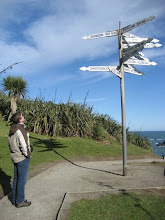
Yesterday we went to Wide World Books & Maps for ideas on where to travel next. My travel ideal has these characteristics:
  • It's new.
  • It's adventurous.

New

I like variety, so I want to go somewhere I haven't been before. Somewhere new has different meanings at different scales, however:
  1. Considering supercontinents, I have been to Afro-Eurasia and the Americas. However, I have no desire to visit Antarctica, because extreme cold scares me. Consequently this scale is too big to help decide.
  2. Considering continents, I have been to Africa, North America, Europe, and Oceania. This leaves Asia, South America, and Antarctica.
  3. There are also vast regions I haven't visited within some continents I have:
    • In Africa I went to East Africa (Kenya and Tanzania), in Sub-Saharan Africa, so I haven't been to North Africa--or west, central, or south Africa within Sub-Saharan Africa.
    • In North America I've been to both North America (Canada, Mexico, and the United States) and Central America (only Honduras, though the plane landed in Belize), but not the Caribbean.
    • In Europe I've been to England, France, Germany, leaving southern Europe, the Iberian Peninsula, and eastern Europe (depending on how one divides Europe).
    • In Oceania I've been to Polynesia (Hawaiʻi), but not Australasia, Micronesia, or the south Pacific.

Adventurous

As a child, I read high fantasy authors like J.R.R. Tolkien (The Lord of the Rings), C.S. Lewis (The Chronicles of Narnia), and Ursula K. Le Guin (Earthsea). As an adult, I find travel the closest experience to a quest. Elements encountered in a quest include castles, caverns, long distances, foreign languages, forests, mountains, oceans, ruins, sacred places, sailing, and wild animals. Examples in my travels are as follows:
This desire for more adventure travel led to the purchase of 25: Wildlife Adventures and A Year of Adventures: Lonely Planet's Guide to Where, What And When to Do It. In the first book I found I had been to 3 of the 25 places (Baja California, Tanzania, Florida) and experienced 5 of the 25 wildlife adventures (wildebeest migration, alligators, rhino, lions, turtles).

The question remains: Where should William go? I pose this question to the readers of this blog; recommend a place to go. While I'm asking a question of readers, I'll also ask: What should William blog? Of the score of examples above, only a half-dozen have posts.

[Update: I corrected the date to this year!]

2007-05-31

Watching Fido (2007-05-30)

Yesterday I was seeking a break from serious conversation. What entertainment requires less energy than a zombie movie? Using online voucher redemption and Will Call--a combination almost as convenient as a pass--, I decided Wednesday afternoon to join friends at the Neptune Theatre for Fido that night. The crowd that appeared for this black comedy was almost like ones at Midnight Adrenaline films, or Paprika.

I was hoping for goofy fun, and I was not disappointed. Carrie-Anne Moss played her role well. The comedy--especially the Lassie allusions-- were so funny the audience laughed over many of the lines. I enjoyed the film.

Watching La Vida Homo (2007-05-27)

Sunday night at the Egyptian I introduced new friends to other friends with tickets and we all watched a series of short films. I'll list them in order of my enjoyment, from the film I enjoyed most to the one I enjoyed least:
  1. Cowboy Forever. I especially liked the scene in which their cowboy coworkers jokingly hold Jones down for a kiss from Govinda. Without requiring serious discussion they conveyed humorous awareness of the feelings involved.
  2. Heartland. For a suspenseful moment in this short film it's not clear if the main characters will fight or kiss.
  3. signage. There can be many reasons two people stay away from one another. This short shows the real reason isn't always the "obvious" one.
  4. Kali Ma. This was entertaining enough for a longer running time, even if the plot was improbable.
  5. Serene Hunter. Sometimes it's the pursuit that's fun.
  6. 41 Seconds. I liked the way this short film played with presentation on the screen.
  7. I Just Wanted to Be Somebody. The photo for this film never appeared onscreen. Neither did Anita Bryant. Instead, we saw sheep shearing and what appeared to be a baby factory. I suspect there was a mistake in the reels and we watched the wrong film.

2007-05-30

At Secret Festival #1 (2007-05-27)

For reasons I can't discuss, the Secret Festival started me thinking about emotional immaturity and maturity. Signs that suggest emotional immaturity to me include lack of empathy, managing moods with substances, refusing to talk about feelings, and tolerating any behavior in others.

In contrast, The 7 Habits of Highly Effective People quotes Hrand Saxenian's definition of emotional maturity: "the ability to express one's own feelings and convictions balanced with consideration for the thoughts and feelings of others." In 7 Habits this balance between courage and consideration is necessary for Habit 4: Think Win/Win. This habit helps move people from independence to interdependence. This is part of Stephen R. Covey's broader maturity continuum (not merely emotional maturity), from dependence to independence to interdependence.

In How to Be An Adult, David Richo writes, "Adults learn that separateness is not an abandonment but simply a human condition, the only condition from which a healthy relationship can grow. With boundaries come interdependence rather than dependency." In films and in life, I see the value of these definitions of emotional and personal maturity.

2007-05-27

At Muk Gong Saturday Gala (2005-07-26)

Two days after the Opening Night Gala we attended the first Saturday Gala, another film and reception. The film was Muk gong/A Battle of Wits and the reception was at the Hilton.

Although based upon a novel and manga, Muk gong was live action rather than anime (whereas Paprika was anime). I went expecting strategy and stunts, and was not disappointed. The score for films I liked versus films I disliked is 3 to 0.

At the reception our group of a half-dozen guys noticed a SIFF guest that one of our friends suggested had been in Paris, je t'aime, in the segment "Le Marais" directed by Gus Van Sant. I consulted the full cast and crew on the Internet Movie Database on my phone. Since Ryan was sure it wasn't Gaspard Ulliel, we decided it was Elias McConnell.

As he walked away for a cigarette break, I intercepted him and verified his identity. "This party is lame," he said, "there's no one my age." I pointed to two of our friends and said they were his age. "There are no girls my age," he amended. Nevertheless the five of us talked--about Portland, his past and present photography, his role in Elephant, his ongoing friendship with Gus Van Sant (and the roles Elias hopes to play), clubbing in Paris around the filming of Paris, je t'aime, and the Luxembourg filming of House of Boys--until it was time for our friends to leave the party.

2007-05-26

Watching Paprika (2007-05-25)

I vividly remember an experience from one summer in college. I was living with a friend's parents and working a night shift. Early one afternoon I awakened and walked sleepily into their dining room for breakfast. In their dining room I looked up and noticed that the walls were now covered in colorful Arabic tapestries. In fact, the walls were wider than before. It looked like I was inside a Bedouin tent. I placed my hand on my chin in thought, and then shook my finger at the tapestries. "This is a dream!" I said. Shortly afterward I truly awakened.

This experience of false awakening may be the closest experience I've had to reality testing lucid dreaming. As I mentioned before, I like stories and movies in which it is difficult to distinguish appearance and reality. The first film with a dream theme I remember seeing was Dreamscape, but I liked Richard Linklater's rotoscoped Waking Life better. In fact, I recommend Before Sunrise, Waking Life, Before Sunset, and A Scanner Darkly by Richard Linklater. As I noted elsewhere, the first three films in this list have a lot of conversation. The first three films also have Ethan Hawke as Jesse and Julie Delpy as Celine, although they have only a cameo appearance in Waking Life. (The relationship between Jesse and Celine in Before Sunrise and Before Sunset is one of the most realistic romances I've seen in film, including the awkward silences and conversational corrections that happen when two people are getting to know one another. Equally interesting is the decade between the two movies, in both reality and the lives of the characters.) Both Waking Life and A Scanner Darkly address the differences between perception and reality, Waking Life through conversation and A Scanner Darkly through action.

A Scanner Darkly is also the latest I've seen in a similar series of movies influenced by Philip K. Dick short stories or novels--a series that includes my favorite Blade Runner as well as Total Recall, Abre Los Ojos and Vanilla Sky, Minority Report, and Paycheck. Of the associated stories--Do Androids Dream of Electric Sheep?, We Can Remember It For You Wholesale, Ubik, Minority Report, Paycheck, and A Scanner Darkly--I remember reading all but Ubik.

False awakenings, lucid dreaming, difficulty distinguishing dreams and reality, animation (although not rotoscoping), and dreams driving reality--all these themes are present in Paprika as well. We saw this film--the second for us in SIFF 2007--at 21:30 at the Neptune Theatre with friends and what appeared to be anime fans. (I'm glad I got our tickets from Will Call before the printer broke!) While we enjoyed the film and the effects of dreaming, I was somewhat confused by multiple false awakenings and collective dreams.

2007-05-25

At Opening Night Gala (2007-05-24)

The SIFF Opening Night Gala is not merely a movie. It's an entire evening event, from disorganized line to interminable introduction to delightful screening to dancing reception.

Disorganized Line

The back of my Gala Pass says, "Passholders will be allowed preferred entrance into theaters up to 20 minutes prior to showtime, or until passholder allotment is reached." Usually this means separate pass holder's and ticket holder's lines, the former entering first. The staff at McCaw Hall were not aware of this convention, however.

As a group of pass holders gathered, I explained the existence of pass holders who hadn't upgraded to VIP to a half-dozen people: to McCaw Hall staff guarding the door upon my arrival, to SIFF staff directing foot traffic inside, to SIFF staff entering the building, to SIFF staff about to clear the area for ticket holders, to two McCaw Hall additional staff directing foot traffic inside. Finally feature programmer Maryna Ajaja approved our entrance.

Interminable Introduction

Once inside our friends guessed how long the introduction would require, from "Good Evening" to the dimming of the lights for the film. Would it be 13 minutes? 17 minutes? 20 minutes? In "The Price Is Right" format I chose 21 minutes, confident from previous opening night experience that the introduction would require more than 20 minutes. The proceedings began 15 minutes late and lasted longer than 35 minutes.

Surprisingly, parade of sponsors by Gary Tucker (Director of Communications and Community Programming) was one of the more enjoyable parts, complete with a picture of a cat with a bottle of vodka. In lolcat style Ryan and I were working on the caption "I Bought You Vodka, But I Drinked It" when a person behind us said, "I Can Has Vodka?". (Later "i'm in ur likker, drinkin ur vodka" occurred to me.)

Delightful Screening

SIFF opening night films often premier elsewhere; Son of Rambow showed at the Sundance Film Festival. This screening was a crowd-pleaser like The Notebook or The Illusionist rather than a surprise like Me and You and Everyone We Know.

It reminded me most of Dangerous Lives of Altar Boys from SIFF 2002, though not opening night. (As I mentioned previously, I met Jena Malone from The Dangerous Lives of Altar Boys--and Saved!--when she was in town for Donnie Darko.) Both films contain animated sequences based sketches drawn by one of the film's characters. In Dangerous Lives the religious element is Catholic, while in Son of Rambow it's Plymouth Brethren. Dangerous Lives is set in the 1970s, while Son of Rambow is set in the 1980s. Dangerous Lives has mid-teen characters while Son of Rambow has early teen characters.

The improbable plot of Son of Rambow makes good comedy and tolerable sentimentality. The goings-on are goofy, especially with the addition of a French foreign exchange student. The sentimentality, most prominent in the blood brother scene and several rescue scenes, stands in the literary tradition of innocent romantic friendships among boys at English schools.

Dancing Reception

Finally, the evening ended with a reception. The reception was huge and included a dance area, long lines of food and drink, floors of different music, and films projected on the walls. We danced with friends into the night.

At SIFF Ticket Office (2007-05-24)

Each year the start of the Seattle International Film Festival (SIFF) is faster for me. Prior to this blog and in 2005 I purchased passes and tickets at the main box office. In 2006 I had purchased passes and tickets in advance and redeemed vouchers at the member box office. In 2007 I not only purchased passes and tickets in advance but I can also redeem the vouchers individually online. For my two Film Buff 20 Packs this means I don't have to determine all twenty screenings in advance. I've already redeemed 16 vouchers for 2 tickets each to 8 screenings; the tickets will be at Will Call. Consequently this year potential screenings are shared events in Google Calendar rather than public lists in Blogger.

Yesterday Ryan and I still visited the Pacific Place ticket office for my SIFF Gala Pass photograph and our Secret Festival passes--and to avoid the $3.50 service fee on Web purchases for which I can't use my vouchers. While we were there they printed Ryan's Opening Night Gala and Closing Night Gala tickets. Next year I may send in a digital photograph in advance as well and avoid the wait.

2007-05-14

Eating Like a Thin Hobbit

Aragorn: Gentlemen, we do not stop till nightfall.
Pippin: What about breakfast?
Aragorn: You've already had it.
Pippin: We've had one, yes. What about second breakfast?
[Aragorn turns and walks off in disgust]
Merry: I don't think he knows about second breakfast, Pip.
Pippin: What about elevenses? Luncheon? Afternoon tea? Dinner? Supper? He knows about them, doesn't he?
Merry: I wouldn't count on it.
--The Lord of the Rings: The Fellowship of the Ring

Lately I eat frequent small meals--a sort of hobbit diet, except perhaps smaller portions and healthier food choices. I find that the Seattle restaurants we frequent serve meals literally twice the amount I eat in one sitting. I'm glad that restaurants in Seattle, unlike restaurants in Paris, will provide a doggy bag.

I've heard from my doctor and read that frequent small meals aid alertness, improve digestion, increase metabolism, lower cholesterol, maintain weight, and--more important to me--reduce heartburn from large meals and reactive hypoglycemia from blood glucose and insulin variation. Consequently I think my half-meals and snacks throughout the day at home and the office are healthy.