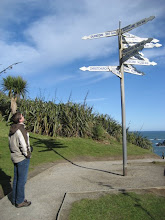
There's the chance of work in China, but I'm going traveling on furlough. It appears it's possible to obtain a Chinese business visa in Hong Kong, where an American citizen can visit for 90 days without a visa. I liked Hong Kong, so a trip there is a contingency plan in case of work in China.
Showing posts with label China. Show all posts
Showing posts with label China. Show all posts
2009-05-10
Planning contigencies (2009-05-06)
There's the chance of work in China, but I'm going traveling on furlough. It appears it's possible to obtain a Chinese business visa in Hong Kong, where an American citizen can visit for 90 days without a visa. I liked Hong Kong, so a trip there is a contingency plan in case of work in China.


2009-05-07
Resuming Mandarin (2009-05-03)

It's a coin toss whether I will return to China this summer--this time with a business visa for coaching, consulting, or development. My employer might have an opportunity, and might send me. Asking simple questions before a Friday social (你想喝葡萄酒吗/Nǐ xiǎng hē pútáojiǔ ma/Do you want to drink wine?) suggests my rudimentary Mandarin study makes me the best non-native speaker in the office. I would enjoy traveling China again, and I need work, so I have resumed studying in hope of temporarily relocating there.
2008-05-27
Seeing Forbidden City (2008-05-14)
 Walking around in the summer warmth of the famous Forbidden City, taking photographs of the red buildings, I feel the elation of a first meeting with someone beautiful. Forbidden City is a fling, however, as I doubt I could live in Běijīng knowing that the sky is not misty but smoggy.
There are surprisingly few people in Forbidden City in the early morning as we work our way south to Tiān'ānmén Square. The crowds arrive later and travel north. We hear Spanish in the gift shop and chat with a traveler from Spain.
After Forbidden City, Tiān'ānmén Square, and a disappointing lunch, jet lag lures us into a nap before a Peking Roast Duck dinner at Quanjude. A friend of a friend who is in Běijīng working for Microsoft meets us. The duck there is delicious.
[Added more links.]
Arriving in Běijīng (2008-05-13)
May 12 we were in the United States of America, and May 13 we were in the People's Republic of China for three weeks of vacation (with no visa trouble). Two airplanes and a taxi brought us to Běijīng, to Xiyuan Villa. On the way the language around us changed from English to Japanese (changing planes in Tokyo) to Mandarin.
Běijīng smells burnt. That's my first impression as I sit in the speeding taxi. It's an official Běijīng taxi, from the taxi stand rather than the salesman inside, but still it has no seat belts. The impression of burning stays with me for a week. The back of my throat and my eyes burn. A business associate later says he smokes only in Běijīng. Since he's going to inhale smoke anyway, he says, it might as well taste good. He also doubts the seat belts would save me from anything.
[Added explanatory links.]
2008-05-26
Leaving Feistel (2008-05-12)
 We once again left our cat with a friend while traveling, this time for three weeks instead of two months.
2008-05-10
Getting immunized downtown (2008-05-06)

While I was entering Tarangire National Park (March 14, 2000), a tsetse fly bit the back of my hand. Fearing further bites, when I reached the porch of my ridge tent I took off my shirt to spray it with Permethrin--and a tsetse fly bit my back.
Later that day I developed diarrhea and a moderate fever. As my temperature rose I worried I would become delirious and no one would discover my condition. This was one of three times in Africa that I wished I had a traveling companion.
My fever stopped rising and finally dropped, I got some rest, and my driver checked with me the next morning. The following day I was well and resumed my safari, taking photographs of elephants and afternoon storms.
This illustrates part of my philosophy of travel. I take whatever precautions are possible, accept that traveling has risks, and then forget my worries and focus on enjoying the experience.
Some precautions are medications and vaccinations for vaccine-preventable diseases. Last year I wrote about anti-malarial medication, mosquito avoidance, and a red colobus monkey. Vaccinations include routine vaccinations like MMR, polio, and Tdap, as well as vaccinations like hepatitis (A and B), rabies, and typhoid.
When I went to Africa, I was watching wild animals, so I received rabies vaccinations. For our trip to China, there wasn't time for the series, and we anticipated less time outdoors. For similar reasons we didn't get the Japanese encephalitis vaccinations. In addition, there are shortages of both of those vaccines. We'll avoid malaria-risk areas of China as well. We did go to King County Downtown Public Health Center Travel Clinic to update routine vaccinations and get hepatitis and typhoid vaccinations. Finally, Ryan is spraying our clothing with Permethrin. At least this time I'm not traveling alone.
2008-05-08
Buying Northwest Tickets (2008-04-30)
At the end of April I bought us tickets to China using Expedia Travel. We depart Seattle May 12, arriving in Tokyo on May 13 and proceeding on to Běijīng. We depart Hong Kong June 2 for Seattle (via Tokyo again). We're excited to again venture abroad to somewhere new. It's been nearly two years since we purchased our last international flights to Paris. I hope they honor our visas because I'm looking forward to learning Mandarin and seeing tourist sights (e.g., palaces and temples)!
2008-05-07
Getting Visas (2008-03-13)

Learning Mandarin leaves me interested in traveling the PRC. We filled out the "Visa Application Form of the People’s Republic of China", listing as destinations Běijīng, Jǐnán, Shànghǎi, Hángzhōu, Xiàmén, Guǎngzhōu, Shēnzhèn, Hong Kong, and Aòmén (Macau).
On March 7 I relinquished two passports and US$300 cash to Holiday China China in Seattle. A week or so later I retrieved the passports with 12-month multiple-entry tourist (L) visas valid for 60 days each entry.
On March 27, according to the South China Morning Post (via a thread in Asia - North-East Asia Thorn Tree Travel Forum), the PRC stopped issuing multiple-entry visas, restricting travelers to single- or double-entry visas valid for 30 days. This is especially inconvenient for business travelers, one of whom started a blog. A business associate with an apartment in Běijīng wrote, "First time in 15 years I have worried about China immigration." Yesterday the PRC said the restrictions on visas are part of its Olympic security measures. I'm glad we applied early, though I'm slightly worried about third-hand rumors of multiple entry Chinese visas being canceled at the border.
2008-04-27
Listening to Mandarin (2008-01-05/04-20)
Today I am intrigued by juxtaposition of contrasts in spoken (and written) Chinese:
I've written about mental self-improvement several times. Recent research into neuroplasticity suggests thinking, learning, and acting actually change the brain. One of the activities Mozart's Brain and the Fighter Pilot: Unleashing Your Brain's Potential consequently encourages is memorization. Since Mandarin is not in the Indo-European language family like Spanish and English, it poses a memorization challenge for me (though thankfully not due to noun declensions or verb conjugations).
An additional memorization challenge is learning Chinese characters or hàn zì (汉字). In fact, some recommend against learning characters at first; others think writing is the main reason Chinese is so hard. (In contrast, to me the four tones don't sound hard so far.) I am studying an average of one simplified character and compound per day from Tuttle Learning Chinese Characters Volume 1: A Revolutionary New Way To Learn And Remember The 800 Most Basic Chinese Characters.
For flashcards I enter hàn zì into Zhongwen Development Tool (zdt),a program discussed in Chinese forums that has a plug-in to search the CEDICT Chinese-English dictionary. I also downloaded a Pimsleur word list for zdt. The zdt stores hàn zì, pīnyīn romanization, and English definition. Other information (e.g., Learning Chinese Characters visual imagery), I enter into Mnemosyne.
Instant Immersion Mandarin Chinese came with Talk Now! Plus software from Eurotalk Interactive. However, both of the SourceForge programs (zdt and Mnemosyne), like the Pimsleur language learning system, use spaced repetition techniques (an idea I first encountered in Tony Buzan's Use Both Sides of Your Brain). Mnemosyne uses an early version of (and simpler interface to) the SuperMemo algorithm discussed in this month's Wired.
This juxtaposition of modern research and tools with an ancient language and writing may help my memory, but it also provides direction for travel. True immersion may be available in the People's Republic of China, where the official language is Standard Mandarin and the government uses simplified characters.
- to ask, "Is it?" say shì bú shì (是不是), putting "is" next to "isn't";
- to refer to "thing," say dōng xi (东西), putting "east" next to "west";
- to ask, "How many?" say duō shao (多少), putting "many" next to "few"; and
- to refer to "size", say dà xiǎo(大小), putting "big" next to "small."
I've written about mental self-improvement several times. Recent research into neuroplasticity suggests thinking, learning, and acting actually change the brain. One of the activities Mozart's Brain and the Fighter Pilot: Unleashing Your Brain's Potential consequently encourages is memorization. Since Mandarin is not in the Indo-European language family like Spanish and English, it poses a memorization challenge for me (though thankfully not due to noun declensions or verb conjugations).
An additional memorization challenge is learning Chinese characters or hàn zì (汉字). In fact, some recommend against learning characters at first; others think writing is the main reason Chinese is so hard. (In contrast, to me the four tones don't sound hard so far.) I am studying an average of one simplified character and compound per day from Tuttle Learning Chinese Characters Volume 1: A Revolutionary New Way To Learn And Remember The 800 Most Basic Chinese Characters.
For flashcards I enter hàn zì into Zhongwen Development Tool (zdt),a program discussed in Chinese forums that has a plug-in to search the CEDICT Chinese-English dictionary. I also downloaded a Pimsleur word list for zdt. The zdt stores hàn zì, pīnyīn romanization, and English definition. Other information (e.g., Learning Chinese Characters visual imagery), I enter into Mnemosyne.
Instant Immersion Mandarin Chinese came with Talk Now! Plus software from Eurotalk Interactive. However, both of the SourceForge programs (zdt and Mnemosyne), like the Pimsleur language learning system, use spaced repetition techniques (an idea I first encountered in Tony Buzan's Use Both Sides of Your Brain). Mnemosyne uses an early version of (and simpler interface to) the SuperMemo algorithm discussed in this month's Wired.
This juxtaposition of modern research and tools with an ancient language and writing may help my memory, but it also provides direction for travel. True immersion may be available in the People's Republic of China, where the official language is Standard Mandarin and the government uses simplified characters.
Subscribe to:
Posts (Atom)