Showing posts with label finance. Show all posts

2009-05-10

Planning furlough (2009-04-27/30)

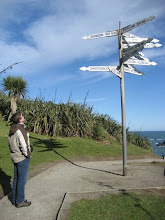
Sign on Trail to Tian Tan Buddha
Despite the prospect of work in China, there is currently little coaching or development management for me. Consequently my company sent me on furlough. The finances suggest the furlough could stop in 30 to 60 days; sales staff suggest it will stop sooner. Since I've saved (expenses and taxes at home average 52% of income), this seems like an opportunity to both help my employer and to travel while I'm still brave enough to do it. I think it is more likely than not that there will be work when I return.

[Resized photograph.]

2008-08-06

Imagining financial planning (2008-08-06)

Sample Retirement
Another life I imagine might be some sort of a financial planner. Clearly I like to play with numbers, and review personal finance books (e.g., illustrating compound interest and the cost of current gratification, or explaining stocks and bonds). While I'd like further education, I already have some competence with finance, following this advice:
  • Simplify by donating or selling unneeded items.
  • Maintain a used car as long as possible (e.g., by minimizing driving).
  • Have no debt--in fact, through budgeting save an emergency fund for one year's expenses.
  • Save and research for major purchases (including SIFF and travel).
  • Pay bills online automatically.
  • Almost always pay the full balance on credit cards selected for their features.
  • Regularly review three free credit reports.
  • Contribute to an (Roth or traditional) IRA.
  • Use savings to defer income in order to start a business.
  • Research and purchase auto, dental, disability, liability, life, medical, renter's, and vision insurance, combining when possible.
  • Have an estate plan.
  • Set up a 401(k) and fully fund it.
  • Periodically review asset allocation.
  • Have written goals and milestones for net worth and retirement.
While I'm not (yet) a millionaire, I would be interested in coaching others in Seattle, particularly those starting out in technical fields.

[Corrected wording.]

2007-12-31

Reviewing 2007 in Seattle (2007-12-31)

I'm pleased with 2007 in Seattle, though I'll adjust my goals for 2008 in light of a review of the past year. While I had personal goals--some qualitative--, and even goals for how I help others, there are some quantitative goals I mentioned in this blog. Below is the year in numbers, Harper's Index style:
  • Total pages I read for "Where's William?" blog: 8,263
  • Number of books I wanted to blog in 2007: 50
  • Actual number of blog posts about books in 2007: 30
  • My blogged books score: 60%
  • Number of books I want to blog in 2008: 12
  • Six-hour days I wanted to spend in the forest in 2007: 6
  • Six-hour days I actually spent in the forest in 2007: 5
  • My outdoors score: 83%
  • Six-hour days I want to spend in the forest in 2008: 6
  • Pounds I wanted to lose upon returning from Paris: 15
  • Pounds I lost and kept off at first through workouts and frequent small healthy meals and later through walking: 17
  • My weight score: 113%
  • Body fat percentage I want to lose in 2008: 4%
  • Songs I wanted to perform on the guitar in 2007: 5
  • Songs I performed on the guitar in 2007: 0
  • My guitar score: 0%
  • Songs I want to perform on the guitar in 2008: 2
  • Maximum miles I wanted my car driven in 2007: 14,400
  • Actual miles my car was driven in 2007: 9,508
  • My mileage score: 151%
  • Maximum miles I want my car driven in 2008: 9,600
  • Days/week since 2007-09-06 I wanted 30 minutes of moderate activity: 5
  • Days/week since 2007-09-06 I did 30 minutes of moderate activity: 4.2
  • My walking score: 84%
  • Days/week I want 30 minutes of moderate activity in 2008: 5

2007-12-03

Reading The Four Pillars of Investing

With relatively little effort, you can design and assemble an investment portfolio that, because of its wide diversification and minimal expense, will prove superior to most professionally managed accounts.
--William J. Bernstein, The Four Pillars of Investing: Lessons for Building a Winning Portfolio

A neurologist from Oregon seems an unlikely candidate for financial author and theorist. Perhaps it is not surprising, then, that William J. Bernstein, Ph.D., M.D.--author of The Intelligent Asset Allocator: How to Build Your Portfolio to Maximize Returns and Minimize Risk and The Birth of Plenty : How the Prosperity of the Modern World was Created--contrasts much of his financial advice with conventional wisdom. He writes, "Your social instincts will corrode your wealth by persuading you to own what everyone else in the market owns."

Of stockbrokers Bernstein writes, "He also occupies the lowest rung in the hierarchy of investment knowledge." Of the financial press he writes, "Ninety-nine percent of what you read about investing in magazines and newspapers, and 100% of what you hear on television is worse than worthless." U.S. stock returns are a "random walk" that no one can predict and few in the industry understand. (See the "drunkard's walk" in Conned Again, Watson!; this concept also inspired the title of Burton G. Malkiel's A Random Walk Down Wall Street, which I have borrowed from the Seattle Public Library or SPL.)

Perhaps some of Bernstein's assertions are not surprising: "Risk and return are inextricably enmeshed." While this stands in contrast to occasional low-risk, high-return offers, most readers know these to be too good to be true. Other authors, too, warn against overconfidence, Mistake 1 in Rational Investing in Irrational Times: How to Avoid the Costly Mistakes Even Smart People Make Today by Larry E. Swedroe (also out from the SPL). Edelman and Bernstein emphasize that "You are your own worst enemy."

However, unlike your coworker on the telephone daily with his broker (a broker who Bernstein writes "services his clients in the same way that Bonnie and Clyde serviced banks"), writers Edelman and Bernstein agree that "Stock picking and market timing are expensive, risky, and ultimately futile exercises." Edelman and Bernstein both follow modern portfolio theory; Bernstein especially believes the market is efficient. And in response to the high-fee funds recommended by your financial consultant, Bernstein warns, "The primary business of most mutual-fund companies is collecting assets, not managing money. Pay close attention to the ownership structure of your fund company and of the fees it charges."

Some authors--like Edelman--look at the 10.40% total return of the S&P Stock Index from January 1, 1926 to June 30, 2003 (while noting that past performance is no indication of future results). Bernstein, however, begins with Venetian prestiti prices from 1300 to 1500. "[T]he odds always favor data gathered over the longest time periods." He proceeds through economic history and then uses the Gordon equation to estimate the long-term expected return of the market as 6%.

Bernstein's combination of theory, history, psychology and business (the four pillars) is appealing to me because of its academic approach and statistical emphasis. The Four Pillars of Investing offers an intellectual investigation into the folksy advice to build portfolio income, written in an equally engaging style.

2007-10-19

Rereading The Truth About Money Parts 2-5 (2007-10-11/)

Mutual Funds 1994/2003
Many people fail to save because they simply don't want to stop spending. Fine. Keep spending. In fact, I want you to.
Just change what you spend your money on:
Instead of buying a bottle of ketchup, buy Heinz stock.
--Ric Edelman, The Truth About Money

Like Kiyosaki, Edelman writes, "instead of buying things that later will have no value (like an empty ketchup bottle or a vacation), or virtually no value (like costume jewelry, clothing, or furniture), make sure the things you buy will retain and even grow in value." What are these things? Unlike a bottle of ketchup, there's no grocery store for investments. Parts 2 through 5 of The Truth About Money explain things that retain or grow in value, with many examples, graphs, and stories. (The cover is right that it's "personal finance that's fun to read!") This grocery store of investments has aisles for cash equivalents, income-producing investments, growth investments, and packaged products:
  1. Cash Equivalents have little or no default risk. They can mature in more than one year--e.g., some bank certificates of deposit or commercial paper, U.S. EE Savings Bonds, U.S. Treasury Notes, and U.S. Treasury Bonds--or less than one year--e.g., checking accounts, savings accounts, money market funds, some certificates of deposit, and U.S. Treasury Bills. Ric recommends having six to twelve months' expenses available in less than one year, but otherwise avoiding cash equivalents because inflation erases their returns. Some cash equivalents have surrender charges and tax penalties--e.g., life insurance cash value or fixed annuities. These are not appropriate for cash reserves.
  2. Income-producing investments are subject to default risk (indicated by the bond rating), event risk, and interest rate risk--which one can reduce by holding to maturity or hedging (e.g., with gold). Ric recommends favoring total return rather than rate or even yield. The Truth About Money discusses these income-producing investments:
    • U.S. Government Securities include--in addition to cash equivalents--Ginnie Mae, Fannie Mae, Sallie Mae, and Freddie Mac. A GNMA repays principal as well as interest, and can prepay in 12-15 years instead 30 years.
    • Municipal Bonds may be (currently) income-tax-free, but Ric disputes the relevance of this--and the wisdom of insuring them. In addition, municipal bonds are often callable.
    • Ric recommends against Zero Coupon Bonds because they give low returns, lack payment before possible default, incur taxes on phantom income, and are callable. He also discourages taking physical possession of their certificates.
  3. Investments that confer ownership or equity instead of (or in addition to) income rely on growth for their value. The Truth About Money discusses these growth investments:
    • Stocks grow in value, generate income, have returns that beat inflation, and have tax advantages (tax on capital gains is less than the tax on income or interest, tax isn't due until sale, and heirs don't pay capital gains tax). One can purchase stocks through brokerage firms, discount brokers, or dividend reinvestment plans. Although buying international stock adds currency risk exposure, Ric observes that the international stocks and companies are increasing in value.
    • Real Estate investing adds diversity--but also hassle. For real estate investment Ric recommends lots of cash, for reserves and purchases.
    • Collectibles don't make good investments due to the possibility of fraud or damage, and inability or unwillingness to sell.
    • Hedge Positions could help insure against inflation (e.g., gold), deflation (e.g., bonds, dividend-paying stocks, and cash), recession (e.g., oil and gas, minerals, forest products), lack of confidence (e.g., real estate, gold, and precious metals), collapse of the dollar (e.g., foreign stocks and currencies), and stock market crash (e.g., selling short or options trading like covered call writing).
  4. Just as a real grocery store has prepared foods, the investment grocery store has packaged products--which are really investment companies. These make investments affordable, liquid, diversified, and professionally managed. Open-end or mutual funds have an annual expense ratio and a sales charge (front-end load, back-end load, level load, or no-load). The Truth About Money discusses these packaged products, beginning with six mutual fund types:
    • U.S. Government Securities Funds exist, despite the perception that mutual funds are mostly a method to invest in stocks. These include Ginnie Mae funds, zero-coupon funds, intermediate funds, short-term funds, and ultra-short funds. Related funds are adjustable rate mortgage funds and global government funds.
    • Municipal Bond Funds include money market funds, single-state funds (to avoid state income tax), Puerto Rico funds (to avoid all income taxes), insured muni funds, and high-yield muni funds.
    • High-Yield Corporate Bond Funds (in contrast with short-term and intermediate funds) invest in long-term speculative grade bonds. Investors thus face credit risk in addition to interest rate risk.
    • Balanced Funds invest in four asset classes: cash and cash equivalents, government securities, corporate bonds, and corporate stocks. There are related fund types: Asset Allocation Funds add other asset classes, Growth and Income funds limit asset classes to stock and bonds only, and Equity Income invest in stocks which pay dividends.
    • Stock Funds can focus on different categories of market capitalization, different sectors, or different indexes.
    • International Funds are open-end or mutual funds available in a variety of types: global funds, international funds, single nation funds, regional funds, or sector funds.
    • Closed-End Funds, while still investment companies, differ from open-end or mutual funds. Shares generally trade on a stock exchange rather directly with the fund.
    • Unit Investment Trusts are the third type of investment company different from open-end or closed-end funds. They have a fixed portfolio and definite maturity date.
    • Wrap Accounts are not investment companies but accounts that protect investors from unnecessary trading commissions. However, Ric lists "11 Reasons to Avoid Wrap Accounts."
    • Annuities are available from insurance companies. Variable annuities are securities products, however. They provide tax-deferred growth and guarantees against loss (in the form of living benefits and death benefits) at the cost of fees similar to mutual funds, plus contract fees and mortality charges.
    • Real Estate Limited Partnerships are companies that permit investing in real estate with less hassle (for the limited partners). The Tax Reform Act of 1986 retroactively classified their income as passive, so investors cannot deduct losses from active income.
    • Real Estate Investment Trusts (REIT) are like Real Estate Limited Partnerships, except that they are publicly traded.
This ends the tour of the investment grocery store (complete with links to Wikipedia). See the book for more detail. And have fun shopping!

2007-10-11

Rereading The Truth About Money Part 1 (2007-10-10)

Four Obstacles To Wealth
It is for all these reasons--to protect against risk; to eliminate debt; you're going to live a long time; to hand such major expenses as children, college costs and weddings; to buy cars and homes; to afford a comfortable retirement; to protect against long-term care costs; and to pass wealth to your heirs--that you need to create a financial plan.
--Ric Edelman, The Truth About Money

Part I of The Truth About Money, "Introduction to Financial Planning," discusses the reasons one needs and wants money. Chapter 1 then lists "The Four Obstacles to Building Wealth": procrastination, spending habits, inflation, and taxes.

Imagine a raise of $100 per month invested in stocks producing a combined 10% return. As Kiyosaki writes, buy an asset the produces portfolio income. Investing $100 per month from age 28 to age 65 (e.g., now until 2044) would be a total investment of $44,400. Compounding would make the investment worth almost $414,000.

This scenario enables calculating an example of the four obstacles Ric Edelman lists:
  1. First, reducing the years of contribution from 37 to 25 (e.g., now until 2032) illustrates the effects of procrastination. If the same investment begins at age 40 instead of age 28, the total contributions decrease to $30,000, while the investment value at age 65 decreases to a little more than $123,000. This is almost $291,000 less than original scenario!
  2. Imagine celebrating the raise by buying a Starbucks Grande Caffè Mocha on the way to work each day, except two vacation weeks. This spending habit could reduce the $100 raise by about $67, leaving $33 per month for investment. At age 65 there would be almost $135,000, or $279,000 less than the original scenario.
  3. The preceding examples ignore inflation. If inflation were nominally 3% per year, $1.00 at age 28 would buy as much as $3.03 at age 65. So the $414,000 at age 65 would only buy as much as $137,000 did at age 28. Inflation would remove more than $277,000 of purchasing power.
  4. Finally, consider taxes. A $100 raise could have a marginal tax rate of 33%. Kiyosaki notes the US government taxes earned income the most. This could reduce contributions to $67 per month, less than $30,000 total. At age 65--ignoring capital gains taxes--there would be almost $279,000. Withdrawing from the investment each year to pay capital gains tax, however, would reduce the value to about $203,000, or about $210,000 less than the original scenario.
In summary, the example effects of the four obstacles to wealth are as follows:
  1. Twelve years of procrastination reduces the value of the sample investment by $291,000.
  2. A workday mocha spending habit reduces the sample investment by $279,000.
  3. Three percent inflation reduces the purchasing power of the sample investment by $277,000.
  4. Income and capital gains taxes could reduce the value of the sample investment by $210,000.
The conclusions appear to be start now, buy assets instead of consumable expenses, invest to beat personal inflation, and take advantage of tax deferral. These are beyond the scope of this blog post, however.

(The remainder of this post explains calculation details: As an example--not an endorsement--, First American Mutual Funds FSKSX had a past performance of approximately 10%. The calculations use 9.569% compounded monthly, with no volatility for simplicity. Each scenario has additional assumptions:
  1. The future value (37 years * 12 months/year =) 444 months later of a $100 per month annuity at (9.569%/year / 12 months/year = ) 0.7974 % per month is $413,890.79. The future value of the same annuity only (25 years * 12 months/year =) 300 months later is $123,333.15.
  2. On Capitol Hill, Seattle, 8.9% sales tax makes a $2.95 mocha cost $3.21. Five mocha purchases per week for 50 weeks of the year is an average of 21 mocha purchases per month. The average cost is then $67.41 per month.
  3. The inflation calculation assumes 0.25% per month, which is similar to current values but low considering long-term averages. The present value of a future sum of $413,890.79 at a rate of 0.25% per month for 444 months is $136,590.49.
  4. A "regular" employee who earns $30,651 to $74,200 per year in Washington state would have no state income tax, but would pay 25% United States income tax plus 6.2% for Social Security plus 1.45% for Medicare. For that tax bracket capital gains taxes are 15%. The calculation assumes this applies to all the gains, which is the worst-case scenario--but still has less effect than the spending habit or procrastination example.)

2007-10-08

Reading Rich Dad, Poor Dad (2007-10-07)

Rich Dad, Poor Dad
If you want a lesson in confusion, simply look up the words "asset" and "liability" in the dictionary.... An asset is something that puts money in my pocket. A liability is something that takes money out of my pocket. This is really all you need to know. If you want to be rich, simply spend your life buying assets. If you want to be poor or middle class, spend your life buying liabilities.
Robert T. Kiyosaki, Rich Dad, Poor Dad: What the Rich Teach Their Kids about Money--That the Poor and Middle Class Do Not!

Being from a middle-class background, the subtitle of Rich Dad, Poor Dad caught my eye in the Barnes and Noble personal finance area Saturday. As several responses to Don't Let's Go to the Dogs Tonight show, I like anecdotes. I read with interest Kiyosaki's contrast between his rich capitalist businessman dad and his poor socialist employee dad during his childhood in Hawai`i.

The folksy capitalist philosophy in Rich Dad, Poor Dad begins with an income statement and balance sheet. Kiyosaki simplifies each into two boxes with a line in the middle: for the income statement the line is horizontal, and for the balance sheet the line is vertical.

In the top of the income statement are earned income ("work for owner"), passive income, and portfolio income. In the bottom of the income statement are taxes ("work for government"), ownership-related expenses, and other expenses. Subsequent diagrams expand on portfolio income (dividends, interest, rental income, royalties), ownership-related expenses (mortgage payments, real property taxes, insurance, maintenance, utilities), and other expenses (fixed expenses, food, clothing, fun).

In the left side of the balance sheet are assets which create income--your business, stocks, bonds, mutual funds, income-generating real estate, notes, and intellectual property. In the right side of the balance sheet are liabilities ("work for bank") which create expenses--consumer loans, credit cards, and mortgages.

Poor Dad says, "Go to school, get good grades, and find a safe secure job." In other words, concentrate on earned income in the top of the income sheet. Rich Dad says, "The rich don't work for money, they have their money work for them." In other words, concentrate on passive and portfolio income in the top of the income sheet--with passive income being faster. In the bottom of the income sheet, the government taxes earned income the most, and passive income the least.

Rich Dad, Poor Dad consequently characterizes classes using these boxes. The earned income of the poor pays expenses in the income statement and little affects the balance sheet. For the middle class, expenses and taxes rise with income in the income statement, as do liabilities incurred on the balance sheet. The income of the rich purchases income-producing assets, with less rise in expenses or liabilities. (For example, a corporation deducts expenses from income before taxation.) In this way they practice the "pay yourself first" advice of The Richest Man in Babylon.

The challenge is defining "your business." Kiyosaki writes, "If I have to work there, it's not a business. It becomes my job." Timothy Ferriss has similar suggestions for a "muse" in the "Income Autopilot" chapters in "Step III: A is Automation" of The 4-Hour Workweek.

The goal for both Ferriss and Kiyosaki is freedom. The latter explains his wants:
I want to be free to travel the world and live in the lifestyle I love. I want to be young when I do this. I want to simply be free. I want control over my time and my life. I want money to work for me.
Readers of this blog will recognize this desire to travel and live abroad.

[Added diagram and corrected word.]

2007-10-07

Simplifying on Saturday (2007-10-06)


I set aside days to reduce, organize, and save time. I want less clutter, and less to move if we live abroad. Between the winter solstice and the following new moon is one of the quarterly periods of Discardia, so I picked the first Saturday of the month.

This was similar to the three Saturdays in 2007-04-28/05-12. In April and May Ryan and I did "spring cleaning": cleaned carpets, framed prints, organized books, replaced lights, washed cupboards, and recycled as usual. This also including giving away books, clothes, and household items. This October Saturday we recycled, and cleaned and organized bathroom drawers, discarding unneeded items. Then we started walking.

Our Northgate neighborhood has a walk score of 75-- not as high as Jim's neighborhood. Nevertheless we were able to walk instead of drive to our errands: getting coffee (in personal cups), giving away household items (baskets, mugs, sweaters) at Value Village, recycling a mobile phone at Best Buy, and getting Ryan to work.

At the end of An Inconvenient Truth is "So here's what you can do personally to solve the climate crisis." Under "Get around on less" is "Reduce the number of miles you drive by walking, biking, carpooling or taking mass transit wherever possible." Under "Consume less, conserve more" are "Recycle" and "Carry your own refillable bottle for water and other beverages." I'm pleased to think this Saturday was healthy for my body (by exercising), my mind (by reducing clutter), and the environment (by driving less and recycling).