2007-02-26

Reading Invisible Man (2007-01-28/02-19)

"My belated appreciation of the crude joke that had kept me running, was not enough."--Ralph Ellison, Invisible Man

The narrator in Ralph Ellison's Invisible Man lives through a seemingly surreal sequence of events. The nightmarish quality of the plot may have been ordinary for a black man in the United States before Rosa Parks refused to relinquish her seat. (The book's copyright is 1947.)

Invisible Man illustrates the power of society to define reality, "running" its members without their awareness. This cynical thesis has no relief in the pages of the story, as the narrator finds no escape other than to hibernate. "A hibernation is a covert preparation for an overt action."

The book club for which I read Invisible Man has suggested Catch-22 for their next meeting March 26. In the meantime, I have several books to read to meet the goal of blogging 50 books this year, especially since I read Invisible Man slowly, alternating with other media.

2007-02-14

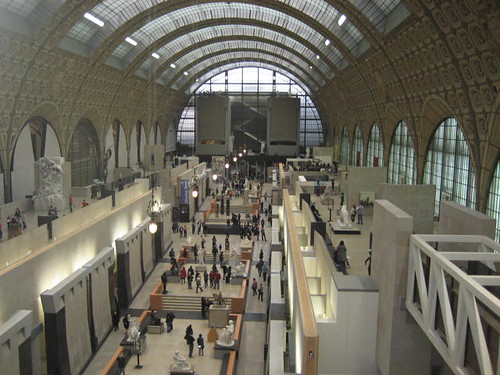
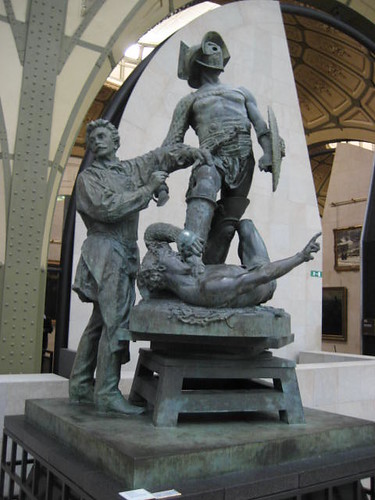
At Musée d'Orsay (2006-12-03)

Musée d'Orsay
Sculpture of Sculptor Sculpting
Before I recommended Versailles, I wrote my friend that I'd recommend Musée d'Orsay. We went there our last day in Paris, and I'm glad we didn't miss it.

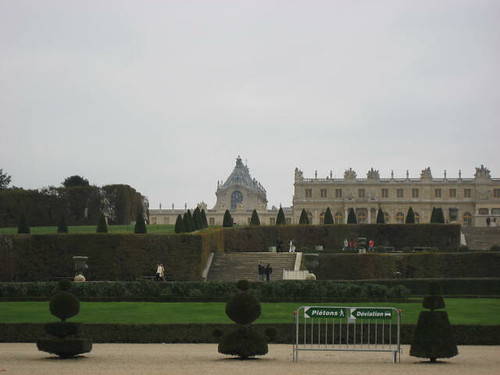
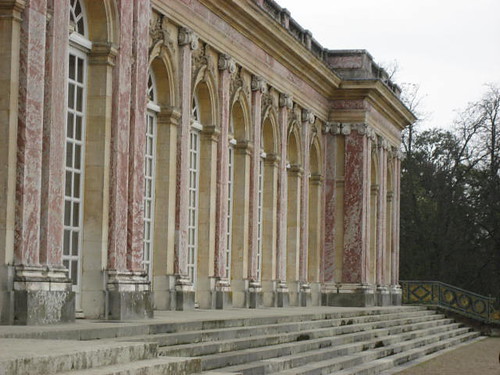
In Versailles (2006-11-08)

Back of Château de Versailles
Back of Grand Trianon
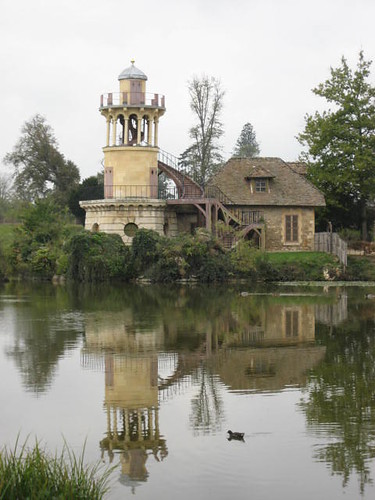
Petit hameau
A friend asked, "If you had three days in Paris and its environs, and had never been there before, what would you go see?" I recommended the places pictured in the photographs quite close to Paris on the map of my geotagged photos--in Paris and Chartres. (I excepted ones idiosyncratic to my visit like M. Berger's salon where I lived or Le Chao-Ba-Café where I worked remotely.) However, since my European travelogue then ended with October 23, 2006, at Château d'Amboise, I wrote that I'd recommend a Paris location from second half of my visit there. My recommendation is Versailles, so I've uploaded these to my Flickr photos. In Versailles we saw these places:
  • Château de Versailles (although La Galerie des Glaces was under renovation),
  • Château de Versailles park and garden (although the Fountain of Apollo had construction around it),
  • Grand Trianon,
  • Petit Trianon, and
  • Petit hameau.

Watching Das Leben der Anderen/The Lives of Others (2007-02-11)

Das Leben der Anderen/The Lives of Others contains both empathetic character development and entertaining plot twists. Set in East Germany before (and a little after) the fall of the Berlin Wall, the story follows the main characters, a Stasi officer and the playwright-and-actress couple he surveils, in a way that shows their humanity.

Director Florian Henckel von Donnersmarck said after a preview screening that the film has special meaning to many of those in Germany that viewed it or participated in its creation. In the cast one example is Sebastian Koch, who plays Georg Dreyman, the playwright: he experienced Stasi intimidation himself. In the crew another example is the property manager, who went to great lengths to assure the authenticity of the props in the film. In the audience many were reminded of their experiences in the GDR.

It sounded like Germany has some lack of constructive methods for its citizens to relate to former Stasi informants and officers, and to address the memory of the arrests, suicides, surveillance, and threats the film shows. Some Seattle audience members suggested the model of the Truth and Reconciliation Commission. I was reminded of Red Dust. However, the goal of the TRC was truth rather than justice. It's possible that since the Stasi files are available for review by those who were surveillance targets, the truth is sufficiently available.

Das Leben der Anderen is an engaging film due not only to the people, place, and time it portrays, but also for the suspenseful sequence of events. I recommend those near Seattle's Harvard Exit Theatre go see it when it opens there February 16.

At Café on the Ave (2007-02-14)

This popular cafe on University Way NE has WiFi (the key is on the receipt), many power outlets, cute baristas, good drinks, decent meals (the price buys generous helpings rather than gourmet food) and music (Washington band Death Cab for Cutie is playing now). Due to its proximity to UW students often occupy the four-person tables near the windows, but there are outlets elsewhere.

I "Sharpen the Saw" (as Stephen R. Covey writes) physically by getting my heart rate in the target zone three times a week--in addition to trying to eat healthy food. I use UW's IMA for this. Since other goals are to simplify my life by driving less and making transit time more tolerable, it makes sense to stay in the University District before or after my workout. Café on the Ave is a good place for me to work.

Wandering East Africa Years Ago (2000-03-01/31)

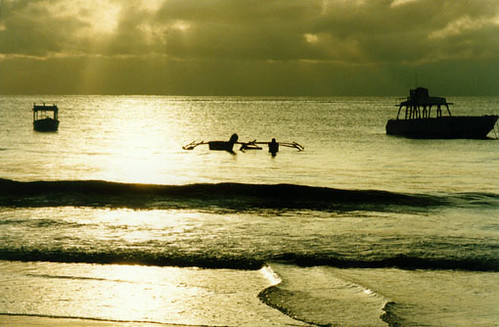
Indian Ocean Near Mombasa
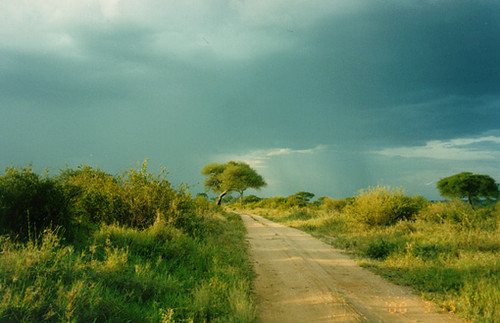
Tarangire National Park
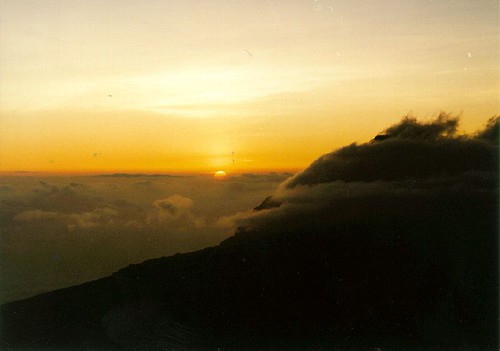
Sunrise from Hans Meyer Cave, Kilimanjaro

2007-02-08

Mulling over the truth of multitasking (2007-02-07)

"It’s not a Papal Edict, people; it’s 180 seconds of caffeinated ranting."--Merlin Mann, Responses to "43F Podcast: The Myth of Multi-tasking"

The summary for one of the podcasts I listened to from 43 Folders yesterday says this:
“Multi-taskers” are really just splitting their time and attention into smaller slices than you; no one can really do more than one thing at a time.
The "myth" of multitasking, Merlin says, is as credible as the yeti. He elaborates with exaggerated examples and the alleged expectation that we should be "parallel processing computers."

This caffeinated rant is confused from beginning to end. To "discover" that multitasking is "actually just... splitting... into very small slices" is to "discover" what is in computing the definition of multitasking. As the Wikipedia entry states, "The act of reassigning a CPU from one task to another one is called a context switch. When context switches occur frequently enough the illusion of parallelism is achieved."

Nevertheless true parallel processing--not simply the illusion of parallelism produced by multitasking--is also possible for humans. This morning I washed dishes while participating in a Skype standing meeting. My hands didn't stop rinsing dishes while I listened; I did two tasks simultaneously by any reasonable and useful definition.

Merlin's rant sounds as though its intent is to soothe the self-esteem of those who can't switch contexts easily. I disagree with the assertions and want to clarify the concepts. I find far more useful Steve Pavlina's "Do It Now" distinction between tasks requiring high attention and tasks requiring low attention:
The idea of multitasking may seem to contradict the previous piece of advice to work all the time you work. But whereas the previous tip refers to high intensity work where you must concentrate all your mental resources in order to do the best job you can, this tip addresses low intensity work where you have plenty of capacity to do other things at the same time, like standing in line, cooking dinner, flying on a plane, or walking from point A to point B. Multitasking shouldn't be used where it will significantly degrade your performance on a crucial task, but it should be intelligently used to take advantage of excess capacity.

Reading, and Listening to Podcasts

"Something was going on which I didn't get."--Ralph Ellison, Invisible Man

Ralph Ellison's Invisible Man

In the week and a half since my last blog post about a book, I've been reading Ralph Ellison's Invisible Man for a book club meeting February 19. I would probably not read this book if someone else hadn't selected it; it's not in my usual genres.

I find myself reading Invisible Man slowly because the narrator is frequently bewildered. If, in contrast, I understood the events he witnessed, this would be dramatic irony. Since I don't understand, either, it's simply confusing.

Savage Love Podcast

So sometimes I make transit time more tolerable by listening to podcasts instead of reading. I tried this several years ago with an MP3 player, and found the downloading and updating inconvenient. I tried again with a second-generation iPod nano, and the synchronizing is automatic, now that I use iTunes instead of WinAmp. I can listen in the car as well as on the bus, using a cassette tape adapter. On my iPod currently are .NET Rocks!, 43 Folders, AA Meeting: The Academy-Awards Related Obsessions of David Schmader (and Guests), and--because sex has always fascinated me--Dan Savage's explicit Savage Love sex advice podcasts. Several of these are Seattle locals.

2007-01-28

Reading The Omega Diet (2007-01-09/28)

Everyone I know seems to have a different approach to nutrition: Atkins, Mediterranean, Nourishing Traditions, South Beach, etc. Each has a different approach to carbohydrates, monounsaturated fats, saturated fats, milk products, fiber, etc. Each cites research in a controversial field.

I need to have healthy diet and exercise (although there appears to be more consensus on the latter). I'd like to have the metabolism of my last decade. The various contrary opinions confuse me, however. Which diet would be best for me?

Imagining that it would be better to have some plan than none at all, I selected the diet in a book my doctor recommended to me during a recent routine checkup: The Omega Diet: The Lifesaving Nutritional Program Based on the Diet of the Island of Crete by Artemis P. Simopoulos, M.D. The American Heart Association Dietary Guidelines: Revision 2000 has some similarity to this diet.

The Omega Diet, based on the traditional diet of Crete, attempts to mimic the characteristics (particularly the ratio of omega-6 to omega-3 essential fatty acids) of the diet on which human beings evolved. Below are "The Seven Dietary Guidelines of The Omega Diet":
  1. Eat foods rich in omega-3 fatty acids such as fatty fish (salmon, tuna, trout, herring, mackerel), walnuts, canola oil, flaxseeds, and green leafy vegetables. Or, if you prefer, take omega-3 supplements.
  2. Use monounsaturated oils such as olive oil and canola oil as your primary fat.
  3. Eat seven or more servings of fruits and vegetables every day.
  4. Eat more vegetable protein, including peas, beans, and nuts.
  5. Avoid saturated fat by choosing lean meat over fatty meat (if you eat meat) and low-fat over full-fat milk products.
  6. Avoid oils that are high in omega-6 fatty acids, including corn, safflower, sunflower, soybean, and cottonseed oils.
  7. Reduce your intake of trans-fatty acids by cutting back on margarine, vegetable shortening, commercial pastries, deep-fat friend food, and most prepared snacks, mixes, and convenience food.
I conclude with a sample day on the Omega Diet (not including healthy snacks ):

Breakfast
  • 1 bagel
  • 2 oz lox (cold-smoked salmon)
  • 2 T low-fat cream cheese or 3 T low-fat cottage cheese
  • Tomatoes, sliced onions, or capers
  • 8 oz. juice
approximate calories: 462

Lunch
  • 2 cups vegetable soup
    (Hot and Sour Soup)
  • 5 crackers (nonfat or canola-based)
  • 1 cup mixed green salad with 2 T olive oil vinaigrette
approximate calories: 427

Dinner
  • Lean burger
    (5 oz. lean meat or veggie patty, 1 whole-wheat hamburger bun or roll, 1 T. canola oil mayonnaise, lettuce and tomato)
  • 3/4 cups cooked carrots marinated in 1 T. olive oil vinaigrette (served cold)
approximate calories: 620